You’re Functioning, But You’re Exhausted: Is Trauma Keeping You in Survival Mode?
Originally published: May 30, 2026 • Updated: September 2026
Here’s the Gist
“Survival mode” is not a diagnosis. It is a loose phrase people use for feeling like they are constantly getting through the next thing instead of actually participating in their life.
For men with trauma, it may look like staying prepared for problems, avoiding reminders, overworking, shutting down emotionally, or keeping enough distance from people that nobody can hurt you again.
You can be extremely functional while doing all of that. Functioning tells us what you are accomplishing, not what it is costing you.
The trauma connection is more meaningful when the pattern actually relates to what happened, not simply because you are tired, busy, or stressed.
Trauma treatment is not about teaching your nervous system how to relax. We work directly on the beliefs, avoidance, memories, and trauma symptoms that keep taking up more of your life than you want.
“Survival Mode” Has Started Meaning Almost Everything
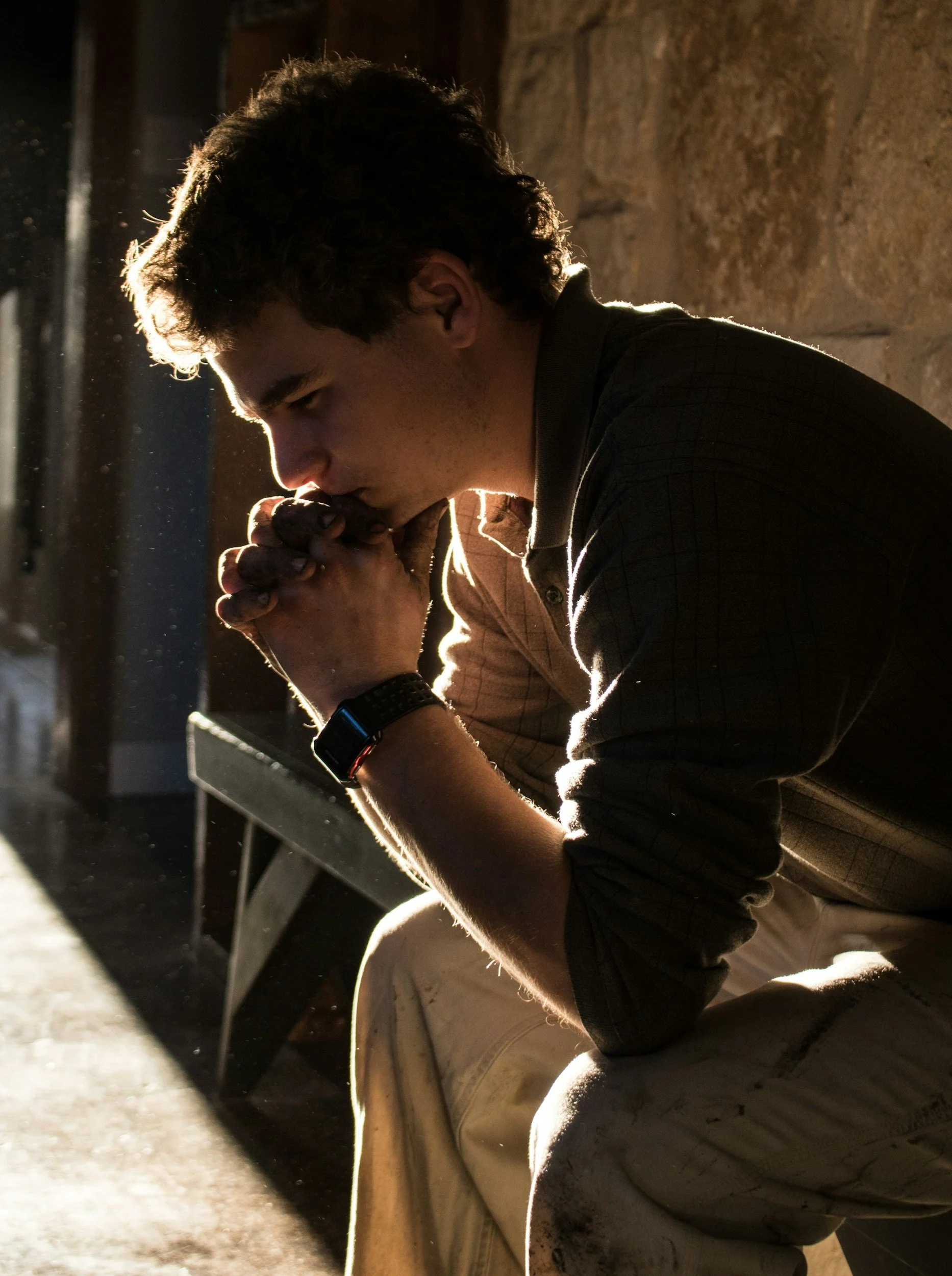
Survival mode is one of those mental-health phrases that has become broad enough to describe almost anything. You’re exhausted? Survival mode. Busy at work? Survival mode. Do not feel like going out this weekend? Apparently survival mode. I don’t think that is especially useful.
Sometimes you are exhausted because your life is exhausting. Sometimes you have too much on your plate. Sometimes work is awful, the kids have activities every night, you are sleeping badly, and you have reached the completely reasonable conclusion that you would like everyone to leave you alone for five minutes. But for some men with trauma, survival mode describes something much more specific. Life starts getting organized around preventing another bad thing from happening.
You stay prepared.
Watch people closely.
Keep yourself busy.
Avoid certain places or conversations.
Handle everything yourself.
Keep enough distance from people that you do not have to rely on them too much.
Maybe nobody around you realizes any of that is happening because you are still going to work, raising your kids, paying the bills, and getting things done. That is where I want to look closer. Not: Am I stressed? But: How much of my life is still being organized around what happened?
Survival Mode Is a Description, Not a Diagnosis
There is no diagnosis called survival mode. When people use the phrase, they are usually trying to describe some combination of being constantly on guard, staying busy, feeling emotionally disconnected, having difficulty relaxing, or spending most of life focused on whatever needs to happen next. Some of those experiences can show up in PTSD. PTSD can include feeling tense or on edge, being easily startled, irritability, trouble sleeping or concentrating, avoiding trauma reminders, feeling detached from other people, and difficulty experiencing positive emotions. Those are actual trauma symptoms. But having one of them does not automatically mean: I’m stuck in survival mode because of trauma. I want the connection.
What happened?
What changed afterward?
What are you doing now because of what happened?
Those questions give us much better information than the label alone.
What “Survival Mode” Can Look Like When Trauma Is Involved
Maybe you start noticing:
You stay constantly busy because quiet gives you more time to think
You are always trying to anticipate what could go wrong
You have a hard time sitting with your back to a door or not knowing who is around you
You avoid specific places, people, conversations, smells, activities, or situations connected to what happened
You keep relationships fairly surface-level because relying on someone feels risky
You handle problems yourself even when help is available
You get irritated quickly when plans change or you lose control of a situation
You feel emotionally numb or disconnected from people you care about
You are exhausted but keep finding another thing that needs to be done
You rarely feel finished because there is always another problem you could prevent
You think about what you should have known, noticed, or done differently
Your life has gradually gotten smaller because avoiding trauma reminders is easier than dealing with them
PTSD includes both avoidance and increased arousal/reactivity, including feeling on guard, irritability, concentration problems, and sleep disturbance. It can also involve detachment, guilt, shame, and changes in how someone sees themselves or the world. The important part is not whether you check enough boxes. It is whether these patterns started or changed after trauma and whether they are still affecting the life you want now.
You Can Be Really Good at Survival Mode
This is part of why men can live this way for a long time without thinking much of it. Some of the behaviors work. You stay prepared, so you rarely get caught off guard. You work constantly, so you accomplish a lot. You rely on yourself, so nobody gets the chance to let you down. You keep difficult things contained, so other people do not see you struggling. From the outside, that can look like:
He’s disciplined.
He’s independent.
He’s really driven.
He handles everything.
And maybe you genuinely are all of those things. I am not interested in taking strengths away from you. I am interested in whether the strategy has become so rigid that you no longer have another option.
Can you prepare without preparing for every possible problem?
Can you let someone help when you actually want help?
Can you slow down without immediately filling the time?
Can you trust someone who has repeatedly shown you they are trustworthy?
Can you go somewhere you want to go even though it reminds you of what happened?
That tells me much more than whether you look functional.
You Are Always Looking for What Comes Next
For some men with trauma, being prepared starts feeling less like a choice and more like the default setting.
You walk into a room and notice exits.
You run through what could go wrong before the trip.
You think three conversations ahead.
You notice changes in someone’s tone immediately.
You want to know the plan, and then you want to know the backup plan.
Sometimes that is just being prepared. But trauma can make those behaviors more important when what happened left you thinking: I cannot afford to miss something again. or: I need to know what is coming. or: If I stay prepared, I can prevent this from happening again. Now staying alert is doing more than helping you stay organized. It is trying to guarantee something no one can actually guarantee: I will never be caught off guard again. That is an impossible job.
Staying Busy May Be Doing More Than Keeping You Productive
Maybe you genuinely like being busy. Fine. But pay attention to what happens when the activity stops. You finish the work. The kids are in bed. Nothing urgent needs your attention. And suddenly your mind goes somewhere you do not want it to go. A memory. Something you regret. A conversation you keep replaying. The thought: I should have known. So you find something else to do. That is one way avoidance can look without appearing like avoidance. PTSD-related avoidance does not only mean refusing to go somewhere. It can also mean working hard to avoid thoughts and feelings connected to trauma. Staying busy may genuinely help you accomplish things and help you avoid something. Both can be true.
Sometimes “I’m Fine” Means “I Have This Contained”
Emotional numbness does not always look dramatic either. You may still laugh, work, parent, have sex, go out with friends. But there are parts of yourself that stay fairly locked down. Your wife asks what is wrong. Nothing. I’m tired. A friend asks how you are doing. Good. Busy. Someone asks about what happened and you change the subject. Maybe you do not want to talk about it. You are allowed to be private. But if the rule has become: Nobody gets access to this part of me it is worth asking what you believe would happen if somebody did.
Would they see you differently?
Would you lose control?
Would you become a burden?
Would they have information they could use against you?
Now we are getting closer to the trauma belief underneath the behavior.
When You Are Already Carrying a Lot, Your Patience Can Get Short
Maybe you notice you are reacting harder than you want to small frustrations.
Traffic.
A schedule change.
A kid melting down.
Somebody asking one more question at the end of a long day.
That does not automatically mean your nervous system is overloaded. Sometimes you are exhausted. Sometimes you have had enough. But if irritability is part of a larger trauma pattern like; poor sleep, always being on guard, difficulty concentrating, feeling keyed up, and constantly expecting another problem, it may be part of PTSD-related arousal. Irritability and feeling tense or on edge are recognized PTSD symptoms. Look at the whole pattern instead of diagnosing yourself from one bad mood.
Why Men Can Miss the Trauma Connection
A lot of men do not recognize these patterns as trauma because nothing about them necessarily feels emotional. You are not sitting around thinking: I’m struggling with PTSD today. You are thinking:
I need to stay on top of this.
I don’t trust that guy.
I’d rather just do it myself.
I’m not going there.
I don’t want to talk about it.
I have work to do.
The trauma connection becomes clearer when you start asking: Why does this feel so important? Maybe there is a completely reasonable answer. Or maybe the answer keeps coming back to what happened. That is what we are looking for.
The Best Clue Is What the Pattern Is Trying to Prevent
If you want to know whether trauma is involved, look at what the behavior seems designed to prevent.
Maybe staying alert is trying to prevent surprise.
Maybe control is trying to prevent uncertainty.
Maybe distance is trying to prevent betrayal.
Maybe staying busy is trying to prevent memories.
Maybe doing everything yourself is trying to prevent depending on somebody who could let you down.
Maybe avoiding one place is preventing you from encountering a specific reminder.
Now the behavior starts making more sense. Not because it is always the behavior you want to keep. Because you can finally see the problem it is trying to solve. And once we understand that, we can ask a better question: Is this still the only way I want to solve that problem now?
Understanding the Trauma Connection Gives You Somewhere to Start
You may already understand yourself pretty well. Maybe you know exactly why you hate being caught off guard. Why you do not trust easily. Why you work constantly. Why you avoid a certain place. Understanding where something came from can be incredibly helpful. Then the question becomes: What do I want to be different now?
Maybe you want to go somewhere you have been avoiding.
Maybe you want to let somebody else handle something without checking behind them.
Maybe you want to be able to slow down without immediately finding another task.
Maybe you want your wife to know what is actually going on instead of getting the edited version.
Now we have an actual target. That is much more useful than trying to achieve some vague state called being out of survival mode.
Trauma Treatment Goes After the Trauma, Not “Survival Mode”
“Survival mode” may describe what your life feels like. It is not what I am treating. I am looking for the trauma symptoms and beliefs underneath it. Maybe you believe:
I should have known.
I need to stay prepared.
I cannot trust anyone.
I have to handle things myself.
If I let my guard down, something bad will happen.
Or maybe avoidance has gradually decided which roads you drive, what conversations you have, who you trust, and what memories you allow yourself to think about. Those are things evidence-based trauma treatment can address.
Cognitive Processing Therapy (CPT) focuses on how you have made sense of what happened and the trauma-related beliefs that may still be keeping you stuck.
Prolonged Exposure (PE) directly addresses PTSD-related avoidance by helping you intentionally approach trauma memories and safe reminders you have been avoiding. Avoidance often provides short-term relief but can keep PTSD going over time.
Narrative Exposure Therapy (NET) may be useful when there have been multiple traumatic experiences and we need to place those experiences within the larger story of your life.
The goal is not: Regulate my nervous system so I feel safe all the time. It is: Trauma is still making too many decisions in my life. I want more options. That is a much clearer treatment target.
What Progress Can Actually Look Like
Maybe you start noticing:
You go somewhere you previously avoided
You stop checking every possible problem before allowing yourself to relax
You let somebody help without automatically taking the task back
You recover more quickly when a trauma reminder catches you off guard
You spend less time replaying what you should have done differently
You tell someone what is actually going on instead of automatically saying you are fine
You can be prepared without needing certainty about every possible outcome
You are more willing to trust people based on what they actually do
You have more room for relationships, hobbies, rest, and things you enjoy
Trauma still exists in your history without organizing quite so much of your present
That is much more useful to me than: Do I feel completely calm now? Calm is not the treatment goal. A bigger life is.
Your Life Should Be About More Than Preventing the Next Bad Thing
Being prepared can be useful. Working hard can be useful. Being independent can be useful. Paying attention to people can be useful. I do not want to strip away every strategy that helped you get through something hard. I want to know whether you still have a choice.
Can you relax when you actually want to?
Trust someone who has earned it?
Approach something trauma taught you to avoid?
Let somebody know you are having a hard time?
Make a mistake without immediately deciding you should have prevented it?
Spend part of your life doing something because you want to instead of because it keeps you ready for the next problem?
That is where the phrase survival mode becomes useful to me. Not as a diagnosis. As a question: How much of your life is still being organized around surviving something that already happened? If the answer is more than I want, we have something worth working on.
FAQs About Survival Mode and Trauma in Men
-
No.
“Survival mode” is an informal phrase people use to describe feeling constantly on guard, busy, exhausted, emotionally disconnected, or focused on getting through the next thing.
Some of those experiences overlap with PTSD symptoms, but the phrase itself is not a diagnosis.
-
Look for the connection to what happened.
Are you avoiding reminders? Staying prepared because you never want to be caught off guard again? Keeping people at a distance because trust changed after the trauma? Staying constantly busy so you do not have time to think?
Those connections tell us much more than simply feeling exhausted.
-
Yes.
PTSD symptoms can affect someone who continues working, parenting, maintaining relationships, and handling daily responsibilities. PTSD can include intrusive memories, avoidance, changes in mood and thinking, feeling detached, hypervigilance, irritability, and sleep or concentration problems. (nimh.nih.gov)
Looking functional from the outside does not answer whether trauma is affecting you.
-
There can be several reasons.
You may simply like being productive. But staying busy can also reduce the amount of time and attention available for trauma memories or difficult thoughts.
If slowing down reliably makes something trauma-related show up and you immediately find another task, avoidance may be part of the pattern.
-
I would frame it differently.
Evidence-based trauma therapy treats the PTSD symptoms, avoidance, and trauma-related beliefs that may be keeping your life organized around staying prepared or protected.
As those problems change, you may naturally have more room for rest, relationships, activities, and choices that are not dictated by trauma.
If “survival mode” for you means staying prepared, busy, distant, or in control because trauma still feels like it could catch you off guard again, we can work directly on the trauma instead of trying to teach you how to relax.
I specialize in evidence-based trauma therapy for men using Cognitive Processing Therapy, Prolonged Exposure, and Narrative Exposure Therapy. Schedule a free consultation call and we can talk about whether trauma is part of what keeps these patterns going.
Explore related topics:
| Trauma & PTSD | Trauma Therapy | Stress & Anxiety | Guilt & Shame |Life Transitions | Relationships & Connection |
About the Author
Brittany Shannon, Ph.D., is a trauma therapist for men with more than 10 years of experience. She trained in the VA system, working with veterans at both outpatient and residential levels of care, and brings that expertise into her private practice today. Based in Kentucky, Dr. Shannon offers virtual therapy across all 43 PSYPACT states, specializing in trauma recovery, PTSD treatment, and men’s mental health. Her work focuses on helping men heal from painful experiences, break free from survival mode, and move forward with clarity and confidence.

You don’t have to keep pushing through this on your own.